
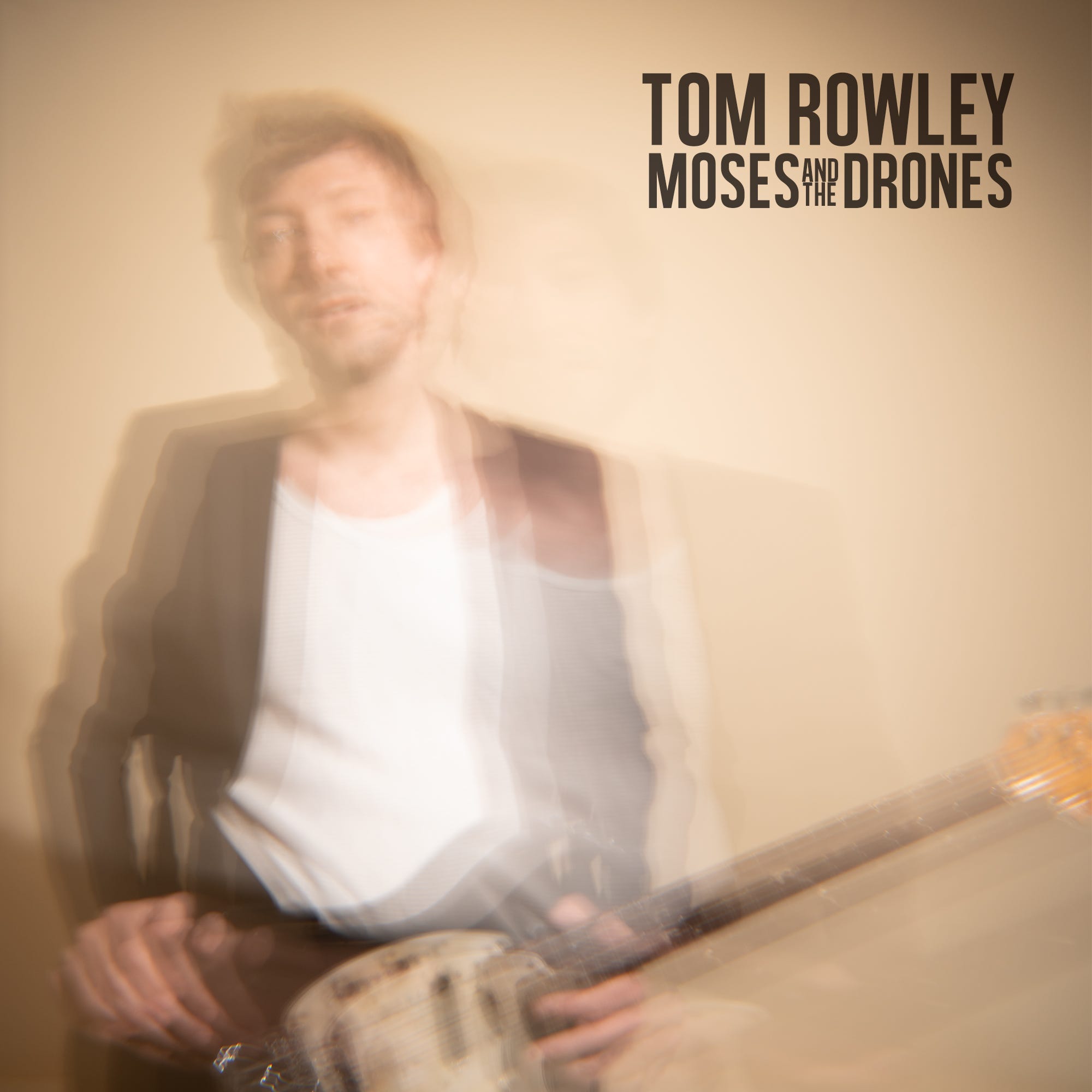
Tom Rowley about his debut "Moses and The Drones" & Getting Lost in the 70s
After twelve years shaping the Arctic Monkeys' sound, the architect finally steps out of the shadows.

For over a decade, Tom Rowley has operated within the framework of modern indie rock’s most defining acts. Known to most as the guitarist in Milburn and a touring regular with Arctic Monkeys, his twelve years of contributions as a key member and occasional co-writer have subtly shaped the Tranquility Base Hotel & Casino, and The Car eras.
With his debut solo album, Moses and the Drones, Rowley steps forward.
We are no longer observing a musician fulfilling a brief; we are examining a fully realised solo project. It is a record anchored in analogue warmth - a calculated departure from modern, algorithm-driven production.
The Velvet Isolation
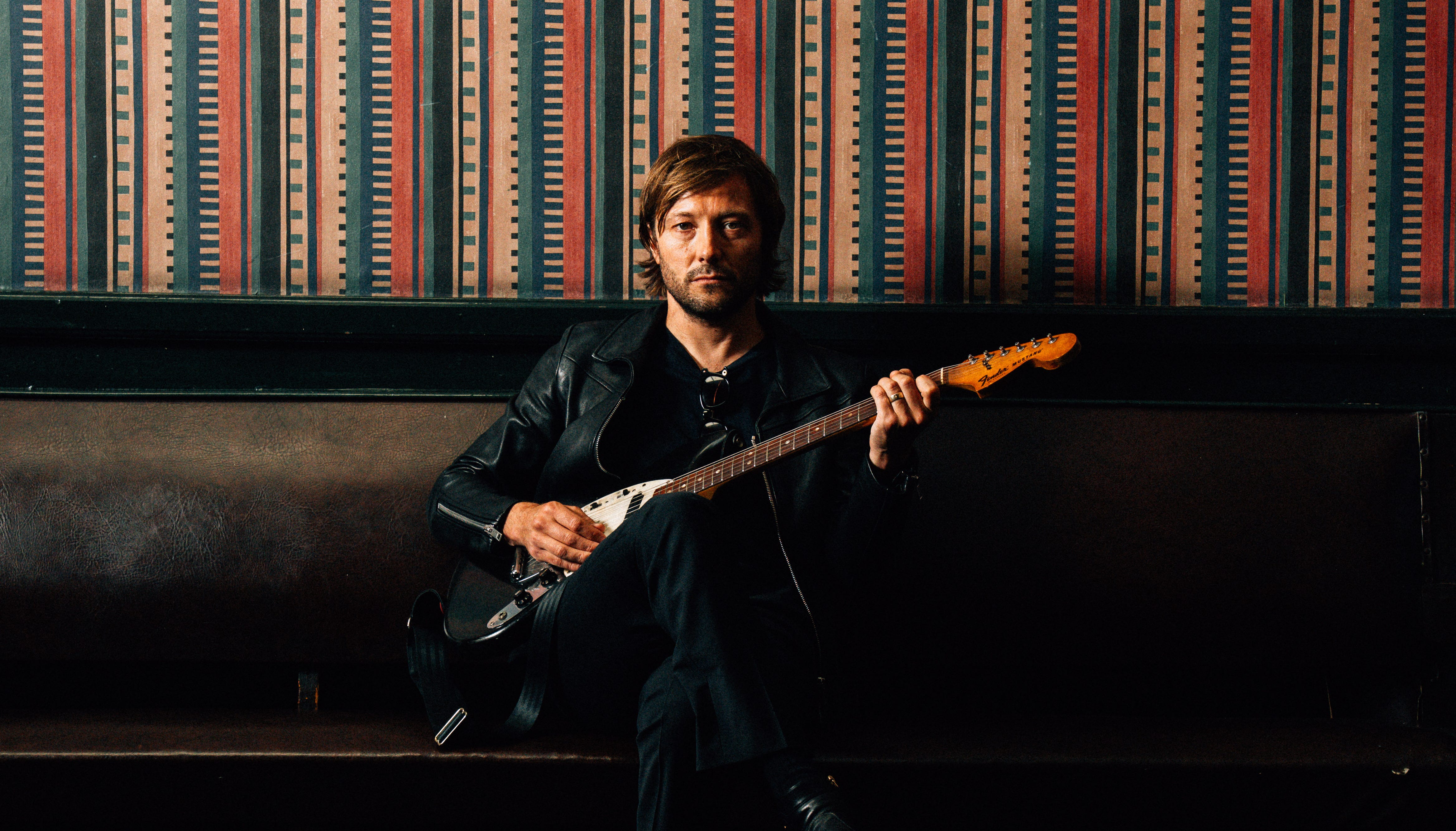
The transition from collaborative sideman to solitary frontman required a fundamental unraveling of Rowley’s creative DNA. “It can feel a lot more daunting writing on your own and the process was completely different to working as a collective,” he confessed to us. “There was a lot more demoing and exploring options via recording as you can’t just play something through in a room to see if it works or not.”
However, this initial isolation eventually gave way to a shared, kinetic energy during the production phase. “When it came to tracking the songs for the album though it was a lot more collaborative and the feel of some of the songs changed from original demos.” The result is an album that feels alive, breathing through the lungs of 1970s Old Grey Whistle Test textures -conjuring imagery of suspended studio microphones and golden crushed velvet.
Twin-Guitar Ghosts and Celtic Shadows
While the record is bathed in West Coast warmth, there are ghosts of a different sort haunting the fretboard. Rowley’s reverence for Thin Lizzy - specifically the high-octane energy of Live and Dangerous and the intricate storytelling of Black Rose - is woven into the record’s instrumental DNA. You can hear it in the “jagged, wailing leads” that define the noir-heavy “EL CHAPO” and the rhythmic conviction of “Breakdown.” It isn’t a surface-level imitation, but rather a translation of that classic twin-guitar harmony and Celtic melodicism into his own “Northern grit.”
Grainy Portraits and Abstract Truths
The album oscillates elegantly between what Rowley calls “blunt force autobiography” and a more “abstract” storytelling. “There’s a bit of both throughout the album,” he explains. “Songs like ‘Tell Me What You Want’, ‘Something Strange’ and ‘The Struggle’ are all definitely autobiographical and very on the nose.”
In these moments, the lyricism is startlingly direct, dealing with desire, pain, and the heavy sensation of “slowly sinking.” In “The Struggle,” Rowley displays a raw, self-deprecating honesty that cuts through the production, singing, “I should have warned you... I can be such a miserable f****,” a line that captures the friction and weariness of a life lived in the professional slipstream.
Conversely, tracks like “Vegas in the Snow” and “Rite Time” adopt a more surrealist tone. Populated by characters like the “wolf man” and the “mess monster,” they paint a vivid picture of “glamour... filtered through the drizzle of Sheffield.” By utilising these dual approaches, Rowley builds worlds where the perspective shifts, allowing him to tell the truth sideways without losing the emotional weight of the record.
The Visceral Mantra of Heat
A recurring and visceral motif throughout the record is “Heat.” This word appears as a mantra in tracks like “Breakdown” and the 70s-crime-thriller-inspired “EL CHAPO,” which Rowley describes as having a “noir aesthetic” defined by “analog warmth and lyrical coldness.”
This intensity is often countered by a desperate search for relief, most notably in “Ice Cubes.” Over a soundscape that evokes “the wreckage of the earth,” Rowley’s voice carries a palpable thirst as he sings: “I like it hot but this is too much. Pass me the ice cubes.” It is the sound of sensory overload - the American light becoming too bright, the Hollywood shimmer becoming too hot to handle.
The Unvarnished Dialect
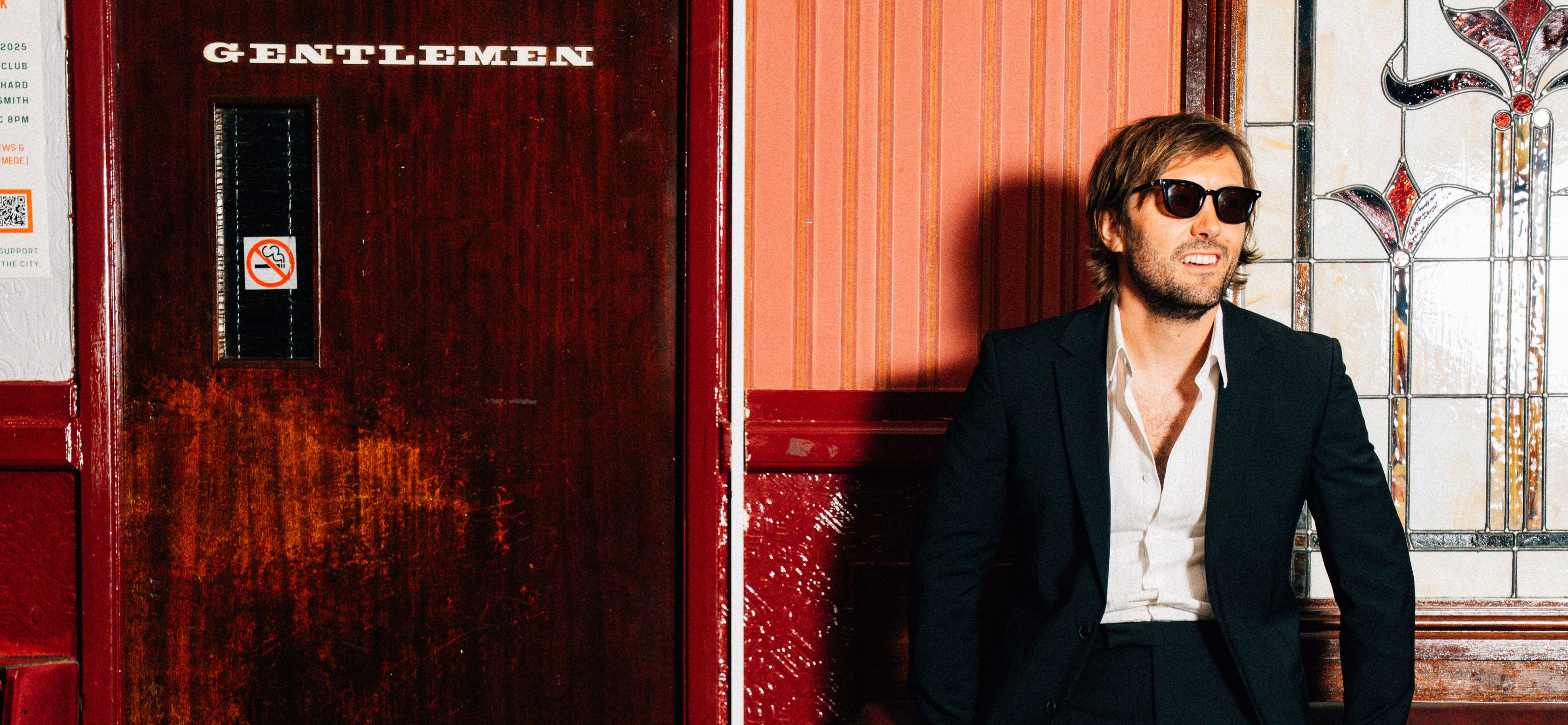
Despite the transatlantic influence, Rowley’s roots remain his immovable anchor. While the rest of the industry files down regional voices to something more palatable for mass consumption, Rowley’s delivery stays entirely uncompromised. “I really don’t think I could sing any other way,” he asserts. “Even when I sing other people’s songs I tend to revert back to the Sheffield accent.”
This refusal to sanitise his identity is what makes Moses and the Drones feel profoundly real. The album concludes with “The Night,” a track that captures a profound, bone-deep weariness. As the night “comes crawling away just like a long lost friend,” Rowley seems to find a moment of peace amidst the “communication breakdown” and “crossed wires” of the preceding tracks.
Moses and the Drones marks the definitive end of Rowley’s tenure in the background. It is the sound of a musician finally taking up the stage he has spent years of sharing with others.
Moses and the Drones is available on all streaming platforms now.
-Shelley D. Schwartz
Give it a listen here: