
THE DREAM MACHINE: "Fort Perch Rock", Kitchen Sink Dramas & The Mechanics of Survival
A conversation with frontman Zak McDonnell on the new album "Fort Perch Rock", regional identity and the desire for the blooming of subcultures.

(German interview coming soon)
THE ARCHIVES OF REGIONAL IDENTITY
European grit meets the Wirral in a soundtrack for a subculture that refuses to die.
We are living through an era of geographical blurring and levelling. As digital spaces flatten our, formerly rich and diverse, culture into a singular, polished “global” aesthetic - the particular, jagged and raw edges of regional identity are being sanded down. The local pub scene is replaced by the franchise; the regional accent is traded for a Transatlantic polished monotone with a distinctive lack of spice and personality.
On the Wirral, that resistance sounds like The Dream Machine. The name was originally chosen for its 1960s underground connotations but the real spark was truly lit when Zak’s brother returned from London and explained the mechanics of Brion Gysin’s strobe invention. Designed to induce altered states, the band operates with that same hypnotic intensity - a belief that art can rewire consciousness. Their work isn’t just music; it’s a preservation of Northern texture - a refusal to let the 'kitchen sink' realism of the British working class be sanitised for a playlist.
Above all of these musical, cinematic, and literary allusions stands the impressive structure of Fort Perch Rock itself - a sea-facing, historic defensive outpost where the River Mersey flows into the Irish Sea. This is the band’s icon to the lost arcades, the melted ice cream and the sea air of New Brighton life. I had a chat with Zak McDonnell about regional identity and the need for ‘European grit’ in the shadows of the Wirral.
THE ANTI-ELEVATOR PHILOSOPHY
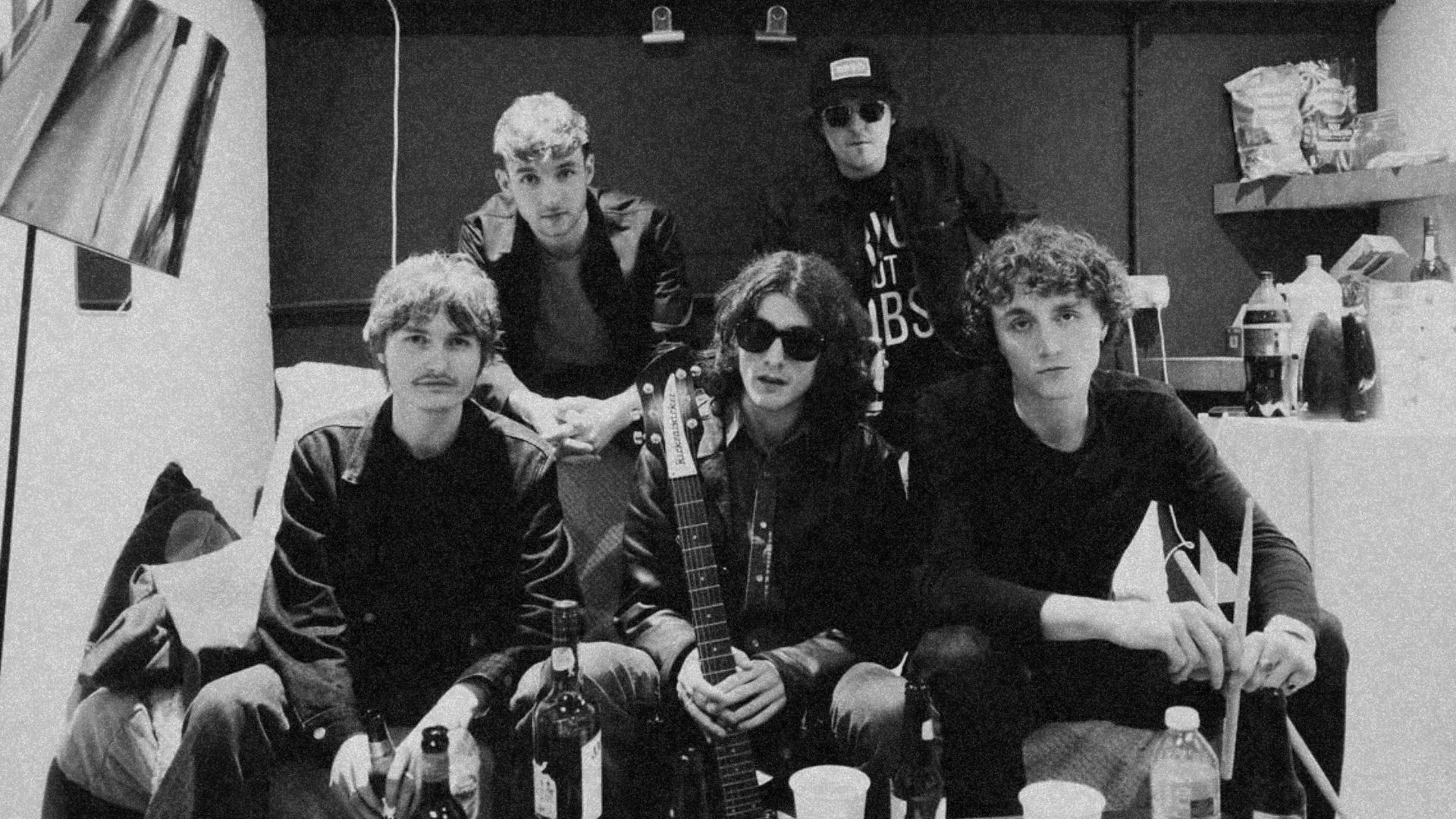
There is an inherent violence in the way Zak views “happy” music. To him, it’s not just a preference; it’s a failure of honesty.
“Happy music is for dentist waiting rooms and elevators,” he says. It’s a declaration that tells you everything you need to know about the creative engine behind Wirral band The Dream Machine. While the modern industry chases the glossy veneer of manufactured joy, Zak is building an archive around a different principle: music as a tool for contentment and survival. Not escape. Not entertainment. Survival.
“I just write every day to feel content and to survive,” Zak explains with a matter-of-factness that cuts through the usual rock-and-roll posturing. “The subject is secondary.”
When asked if the band is a carefully constructed art project or just a gang of friends making noise, Zak refuses the binary: “I don’t think the two are mutually exclusive. We are a gang of friends, making noise above a garage, but we take it pretty seriously. You have to.”
The casual spontaneity of mates jamming colliding with the rigor of craftsmen. You can’t fake survival.
EUROPEAN GRIT & THE MOSRITE PULSE
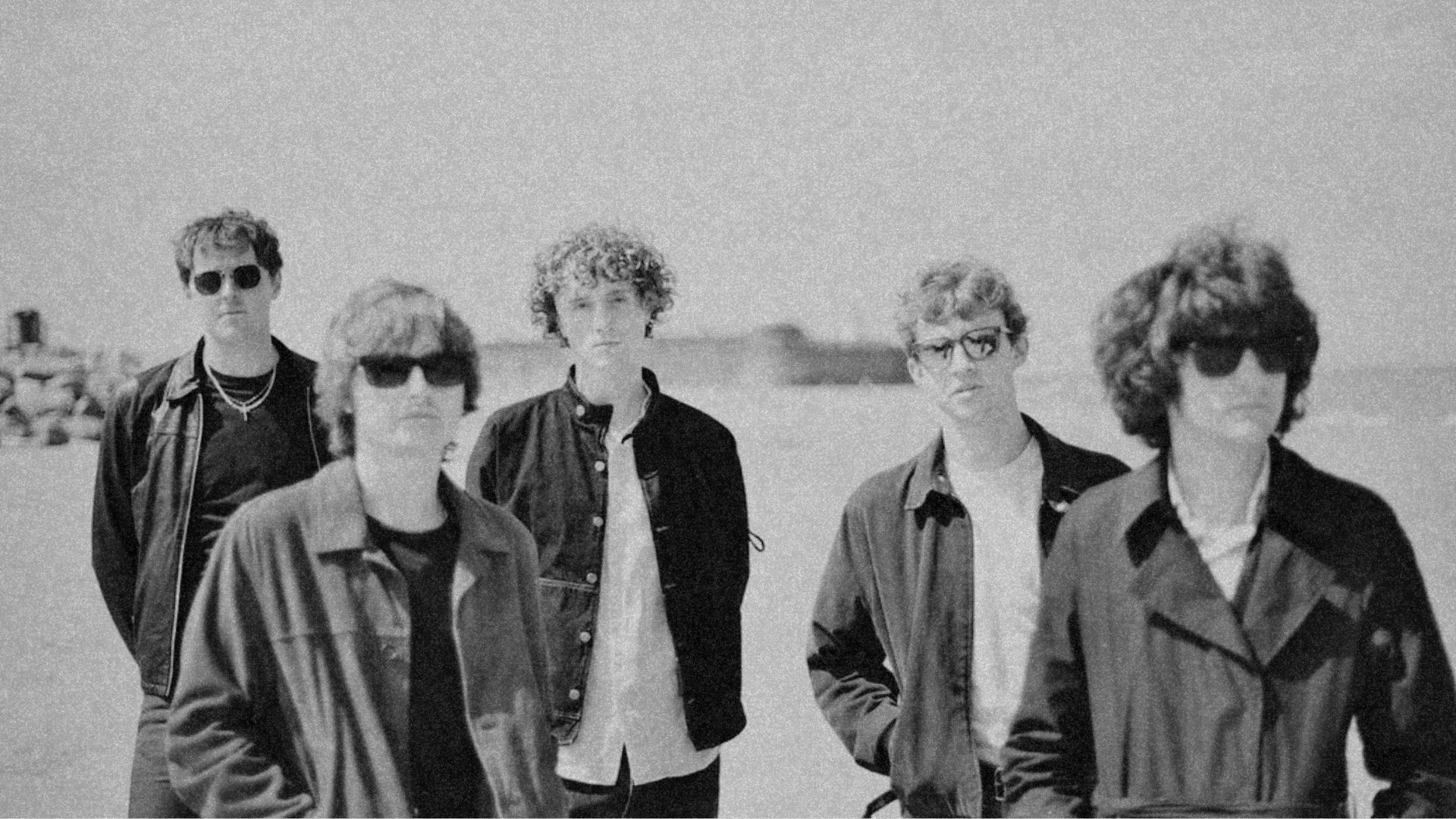
The new material emerged from what Zak calls a “Ramones-obsessed trip to Berlin.” It wasn’t a tourist’s pilgrimage; it was about soaking up a frequency that English venues have let flicker out.
“Some of the psych and punk music we heard in Berlin was levels above anything you’d hear in a bar in England,” he reflects. “Just in any random bar. They’ve still got it right there, in a really authentic way.”
The contrast stings because it’s true. England, once the primary source of subculture, being the home of bands such as Joy Division or the Clash - currently finds itself in an identity crisis. “England is lacking identity and subcultures at the moment more than ever,” Zak observes. “That’s what happens when you reward conformity over originality.”
During that trip to Berlin, Zak tracked down a Mosrite guitar - the surf-punk weapon favoured by the Ramones and Television. It wasn’t fetishism; it was a tactile connection to a sonic lineage. That guitar’s bite anchors the new tracks, bridging 1970s New York grit with the specific, grey geography of the Wirral.
THE RAWNESS OF SONGWRITING
Zak’s songwriting method resembles that of an archivist - collecting fragments of a neglected world and assembling them into something that resonates. Take "Flowers on a Razorwire," a track built around a graphic novel found in an antique shop.
“I’ll make a tune out of anything really,” he admits. “Some of it might be real, maybe none of it is.”
The song juxtaposes the delicate innocence of a “sweet petticoat” against the brutal coldness of “razorwire” - imagery that recalls songwriters’ ability to build narratives from found objects. But where others might deploy irony, Zak’s approach feels more direct. Earnest. Raw.
Their upcoming record, Fort Perch Rock, recorded and self-produced between studios on the Wirral and in Liverpool, embraces this fragmentation. It’s an album that demands active listening, refusing to serve itself up easily. “There’s definitely a lot more chaos,” Zak notes. “It might take a little longer to get into... but some of our best stuff is in there if you dig deep enough.”
THE GHOST OF THE BEACH BOYS
While the record is defined by its restlessness, it frequently pivots into startlingly melodic territory - a contrast Zak attributes to his own internal filter.
“It sounds more summer-y, Beach Boys to me,” Zak says of the more tender turns, even if they were born in a wintry headspace. “I just can’t help sounding sad.”
In a musical landscape obsessed with projecting coolness, this kind of earnest, vulnerable songwriting is the most radical act of all. “It’s never been our priority to be ‘cool,’” he states plainly.
“If you can’t be yourself then who can you be?” - Zak McDonnell
THE KITCHEN SINK DRAMA
Ask Zak where the aesthetical inspiration of the bands’ music comes from and he’ll point to the long shadows of British realism.
“We live our whole lives in a 1960s kitchen sink drama,” he says. It’s an apt comparison. The Dream Machine traffics in the same grainy textures, the same refusal to look away from disappointment. The bands sound feels like a sonic extension of films like A Taste of Honey (1961) or Saturday Night and Sunday Morning (1960), however with the grit of some of Berlin’s hidden gems of underground punk music. Narratives that find a ragged, scrambled and realistic beauty in the mundane of the everyday.
Currently, Leonard Cohen’s debut sits on Zak’s turntable. “It just sounds perfect on vinyl.” The choice is revealing. Cohen understood that depth of personality and therefore, music comes from embracing the dark rather than running from it.
The Dream Machine won’t be played in elevators. They won’t be streamed into dentist offices. True to their nature, following a wild run of UK grassroots venues, the band is set to play their biggest headline show yet at the 1,200-capacity Liverpool O2 Academy on March 27. And that exactly is the point. They aren’t here to soothe you. They’re here to survive, and perhaps, to gift their music to the rest of us, to do the same.
Fort Perch Rock is released on Friday, February 27, 2026.
-Shelley D. Schwartz
Give their music a listen here: