

Nowhere Man - Or: Why Fame Ruins Everything
A sociophonetic look at how The Beatles slowly lost their voices, and why “Do You Want to Know a Secret” remains a tragic trophy of Northern realism.

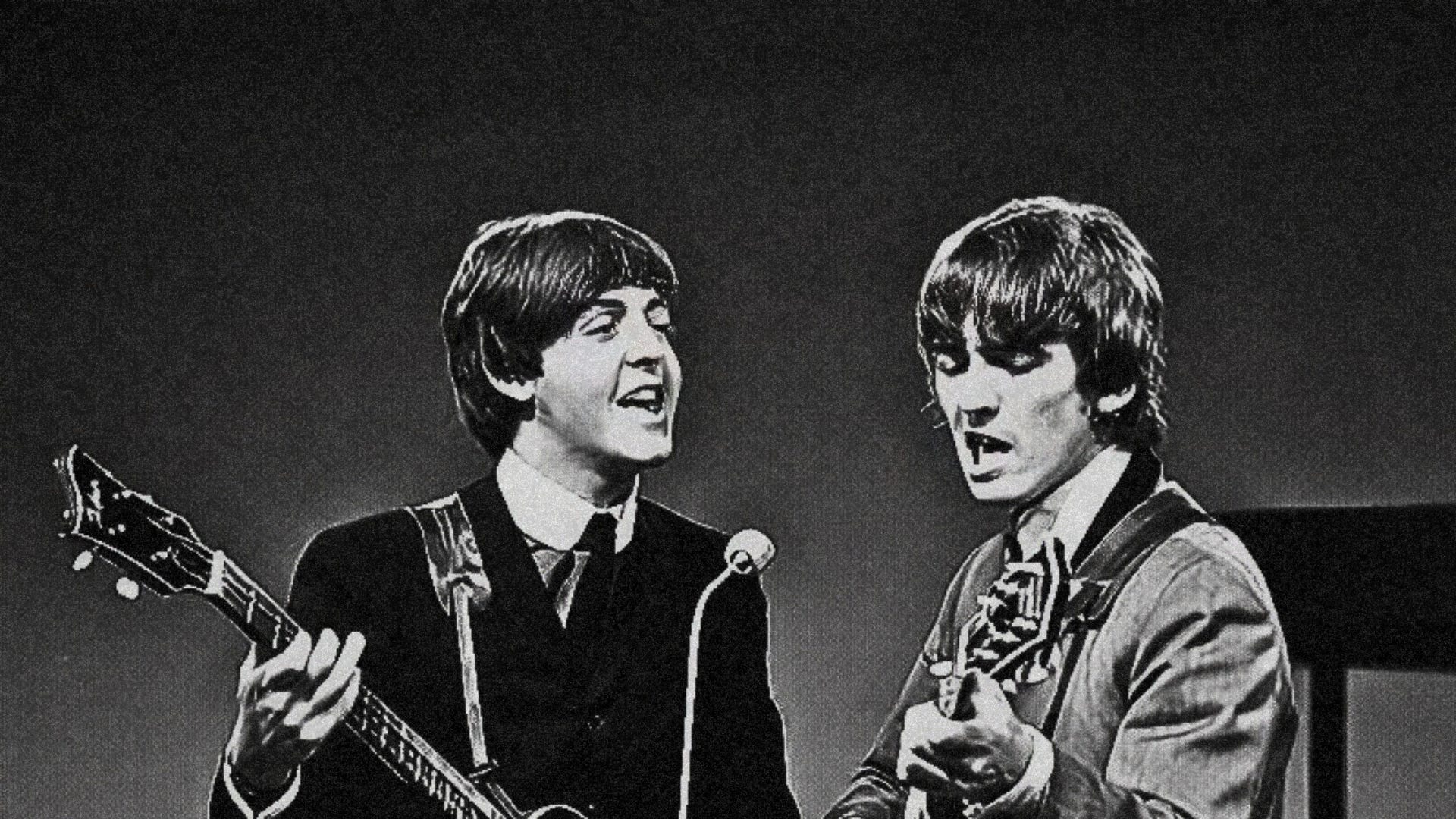
I’ll admit it: I am the kind of person who listens to Please Please Me with a notepad. I know, I’m great fun at parties. I can name five distinct phonological features of the Scouse accent at gunpoint. This is an incredibly strange topic to be hyperfixated on for a German girl.
I grew up in a Polish-German household, therefore, pretty far removed from the damp, rainy streets of the Wirral. Yet my mother was so deep in the trenches of this fandom that she named my brother George after Harrison. I didn’t have a choice - I was born into this pre-existing condition of Beatles obsession.
Now, living in the land of Techno and while everyone is busy flying high on raves, I am hunting down the ghost of the working-class dialect often slowly but surely gets strangled by success.
In music journalism, we talk about the “evolution” of a band. In linguistics, we call it “Attitudinal Levelling.” It’s what linguists call “Or, in layman’s terms: The richer and more famous that you get, the less you sound like the streets that raised you. Makes sense right?
I had a deeper look into the vocal evolution and therefore, vocal delivery of British Pop across decades and let me tell you, you start to see a pattern.
But let’s start at the beginning when this phenomenon became a thing.
The Disruption of 1963
Before The Beatles, British pop was an exercise in cultural cosplay - sometimes better than others. If you wanted to be a star, you adhered to the “USA-5 Model.”
To pass the USA-5 Model test, a singer from London or Manchester had to perform a total linguistic lobotomy. Forget where you are from to make it big. They had to master:
The Hard “R”: pronouncing the “R” in words like star, girl or river
The FLAT “A”: Making words like “dance” and “glass” sound like they were born in a diner in Texas not London
The SOFT “T”: turning ‘water’ into ‘wader’, ‘pretty’ into ‘preddy’
The SOUTHERN “I”: Dragging “my” out into the Southern “maah”; or “I” into “aaah”
The WIDE-OPEN “O“: turning ‘body’ into ‘baahdy’
You can hear it now, can’t you?
In all seriousness, let’s not pretend that these singers and musicians did it purposefully. It was mostly their label that asked them to. The biggest music market, was, and still is the US-market. So when you sound more like the average American, you can be sure that more Americans end up buying your records. Nevertheless, of course, with Elvis sending a cultural shockwave all over the world and the sparkling myth of the American Dream - being American was simply considered cool. So listening to American music, music from the land of freedom, was cool.
The Beatles broke that. Suddenly, the world’s eyes were all set on the industrial city of Liverpool. Girls were crying, screaming, fawning over John, Paul, George and Ringo and their “charming” and in their eyes, “unusual” accents.
But if you look at the data, the boys didn’t hold the line forever.
The “John & Paul” Drift
As the 1960s progressed, the “Scouse” in Lennon and McCartney’s voices began to fade. It was gradual - just a smoothing out of the rough edges at the beginning. By the time we reach Abbey Road, the delivery is rounder. It’s more “Transatlantic” - meaning it mostly sounds like a Standard American accent.
It wasn’t necessarily a conscious “sell-out” or the desire to be perceived as American. It was the inevitable osmosis of the stratosphere: their influences in life conversing with press, with other bands from all around the world and their living conditions. When you spend your life in London, LA, and private jets, the Scouse starts to fade from your throat.
The Big Exception: “Do You Want to Know a Secret?”
This is why I am obsessed with track 11 on the Beatles’ debut album.
It represents a particular tragedy. John and Paul - the benevolent dictators - only let George Harrison sing lead on one single song on Please Please Me. (Thanks, boys).
But that track, “Do You Want to Know a Secret,” is arguably the most important texture on the record. George wasn’t trying to be a “Frontman” in the same way John or Paul were and this is exactly why his accent slips through. The “George girls” probably went crazy for it. How exciting, isn’t it? And why wouldn’t they? I get it. In a sea of John’s and Paul’s accent growing more and more neutral and American, George’s accent was the one that still smelled like that Liverpool salt air. A postcard of the North sent overseas.
If you listen to the song closely, you can hear the Liverpool grit especially in the way that he hits the word "Secret” - affricate, hissy, sharp- making it sound like secrrrret - pure Liverpool. It was exactly that “Scouse of Distinction” - as Lennon mockingly refered to George as - that kept the track from feeling like just another American polished plastic pop song.
And yet, It’s a tame version of Scouse, for sure - he’s still singing for the radio - but it’s the closest we get to the Scouse ”Kitchen Sink” realism of the 1960s on a Beatles record.
For a little while, he isn’t in a studio. He sounds like he is leaning against a wall at a bus stop in the rain, whispering explicitly to you. It has a flat, local intimacy that the later albums lost. And again, you saw that image, didn’t you?
Sadly, even that “distinction” didn’t prevent George from smoothing out his own accent later in life. Sad, I know.
“George Harrison: The Scouse of Distinction.” - John Lennon in A Hard Days Night (1964)
The Return
The lesson of the Beatles’ vocal evolution isn’t that accents last forever. It’s that the most vital art usually happens before the polish sets in.
It is the hunger of the early years - before the hours of media training, before the “Transatlantic” drift - that holds the magic. We crave that texture because it sounds like a real person, in a real place. In a world full of AI, we crave authenticity.
Today, as I watch a new wave of bands emerging from the North of England, I’m seeing a desire to reclaim that 1963 energy. These bands are recording live, raw, unpolished and unapologetically Northern. They are leaving the cracks in the veneer. They are refusing to fix their vowels. They sing about the places they hail from without shame. They are proving that you don’t need to sound like you’re from “Nowhere.” You just need to have a secret to tell.
And now enjoy this little (tame) Scouse diddy:
Shelley D. Schwartz