

Tested Under Fire: Roger McGuinn on the 1960s Renaissance, the Rickenbacker Chime, and the Reality of Craft
The legendary leader of The Byrds breaks down the analogue magic of the 12-string, the illusion of instant fame, and why today's songwriters must log off to find their own "human frequency."

Certain frequencies resist simulation. When Roger McGuinn first ran a twelve-string Rickenbacker through an outboard compressor, he wasn’t merely chasing a hook - he was re-engineering the weight of American guitar music.
We had the pleasure of sitting down with Roger to reminisce and discuss the mechanics of his definitive 12-string sound and the lessons today’s artists can draw from a career spent on the road
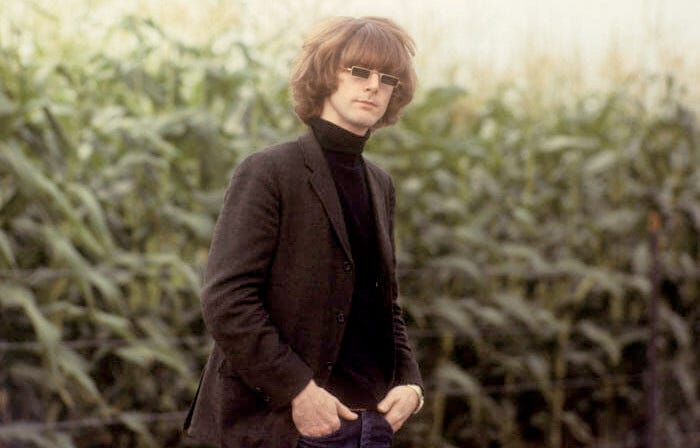
While the modern music industry demands a flattened, instantaneous digital “rush,” Roger McGuinn has spent a lifetime mastering the long road, allowing his sonic roots to settle into the very foundations of rock and roll’s great lineage. We recently had the pleasure to chat to Roger - a true futurist operating in a realm of absolute analogue conviction - to dissect the origin of a sound that altered history, and to extract a masterclass for the new generation of musicians currently operating behind screens in 2026.
Before he was the mythic frontman and leader of The Byrds, inducted into the Rock and Roll Hall of Fame in 1991, he was James Joseph McGuinn III, born on July 13, 1942, in Chicago, Illinois. Raised by parents who worked in the sharp, observant worlds of journalism and public relations - even penning a mid-century bestseller titled Parents Can’t Win - young McGuinn grew up in an environment built on ink, narrative, and the power of communication. Yet, while attending the Latin School of Chicago, his true conversion happened not through the written word, but through a radio speaker.
His driving catalyst was Elvis Presley’s “Heartbreak Hotel.” The raw, echo-drenched tectonic shift of that track shook McGuinn so deeply that he immediately begged his parents for a guitar. That early spark drew a creative line directly to the unvarnished grit of Johnny Cash, Carl Perkins, Gene Vincent, and the pristine vocal architecture of the Everly Brothers. To this day, “Heartbreak Hotel” remains a fixture in his autobiographical live shows - a ritual loop that connects the master back to the boy holding his first guitar.
THE HUMAN FREQUENCY
To understand the architecture of the McGuinn “jangle” is to understand a deliberate mechanical alchemy. It is not an accident of the studio; it is a ritual of specific hardware. For the youth of 2026 attempting to replicate that legendary 1960s luster through clinical digital textures or AI-modeled plugins, McGuinn’s technical setup offers a definitive lesson: soul cannot be synthesised.
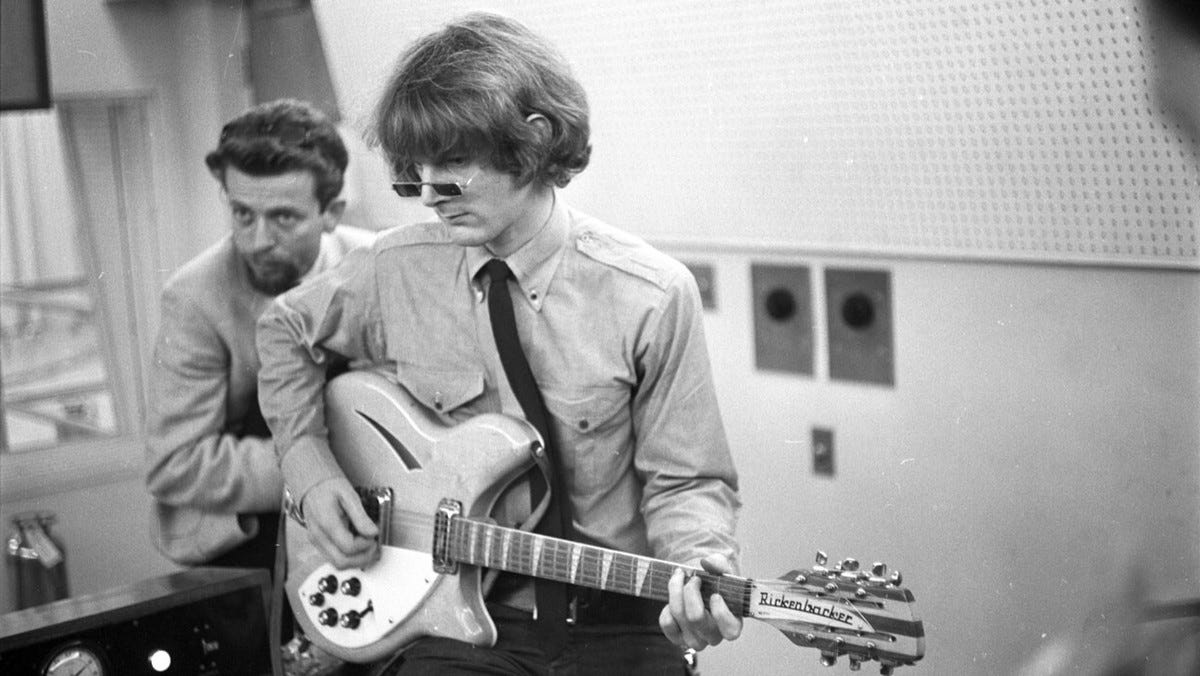
The signature chime relies on a precise combination: a Rickenbacker 360/12, a heavy dose of onboard compression, and traditional German craftsmanship.
“The original guitar strings used by the Beatles were flat wound and made in Germany,” McGuinn reveals to us. “I wanted to maintain that same luster in my Rickenbacker sound. It is a more ‘human frequency’.”
This “human frequency” is what modern digital replication fails to capture. It is a texture built on the resistance of metal, the tactile pull of flatwound Pyramid Gold strings, and the physical weight of an instrument that breathes. For future musicians looking to capture this timeless shimmer, the lesson is clear: the gear is not a decorative prop - it is a conduit.
THE CRUCIBLE OF THE SCUFFLE
Today’s fame machine is built on the illusion of immediacy, where an algorithm can elevate an artist overnight. But McGuinn warns that this instant architecture robs young creators of the vital, grit-staged evolution required to master their craft. Long before hitting number one, he spent years “scuffling” as a disciplined sideman for the Limeliters and the Chad Mitchell Trio.
“There is no substitute for experience,” he notes with absolute clarity. “Without it one is ill prepared for instant fame.”
This period of paying dues was where the 12-string was tamed and the complex vocal harmonies were perfected. It was a process of trial by fire and it was guided by legendary mentors. When McGuinn began mixing traditional folk chords with the raw momentum of rock and roll in the coffee houses of Greenwich Village, he faced immediate, icy rejection from the folk purists.
He leaned into the friction, following a vital piece of advice from his mentor, Bobby Darin.
“Bobby Darin was a mentor to me and suggested that I perform in front of live audiences as much as possible,” McGuinn shares. “He said that it doesn’t matter how good you were in front of a mirror, you have to test it under fire.”
For the modern artist terrified of online disapproval, McGuinn’s journey demands a return to the physical stage. The mirror and the camera lens lie; the live room, with all its unpredictable danger, is where real art is verified.
THE ROLLING THUNDER CARAVAN
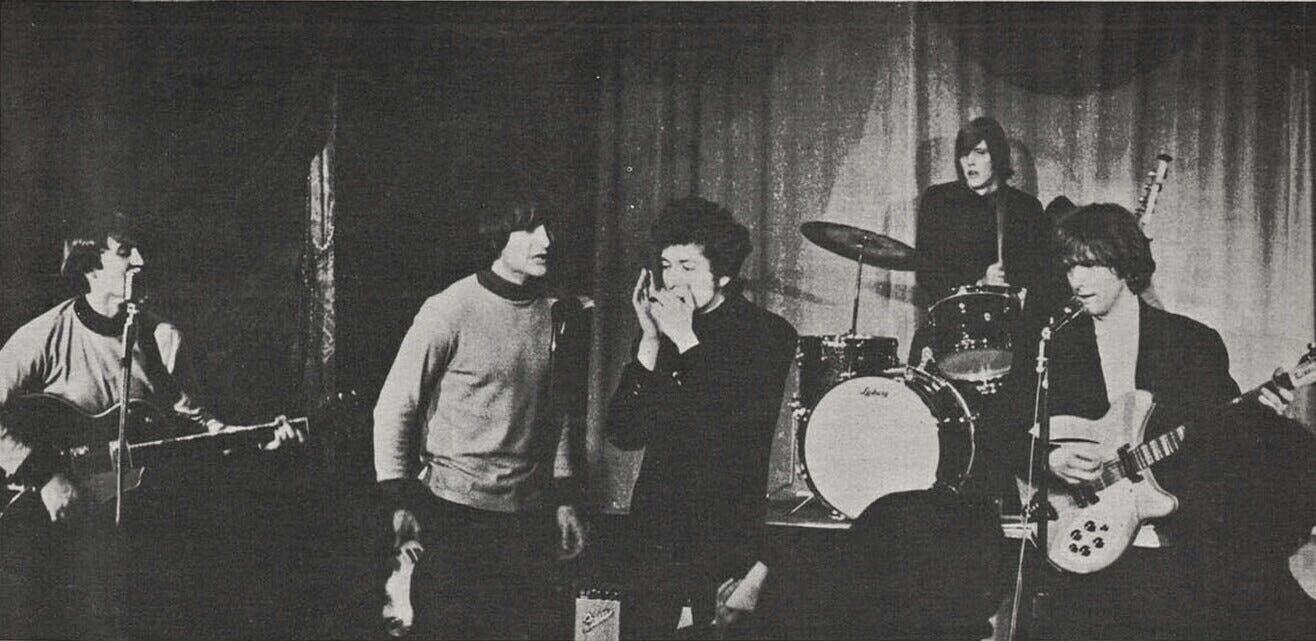
McGuinn’s output after The Byrds settled into a rhythm of deliberate partnerships - spanning ten solo albums and intuitive work alongside Tom Petty and Chris Hillman. Yet, the definitive document of his nomad phase belongs to Bob Dylan.
In the autumn of 1975, during an idle basketball game at McGuinn’s Malibu estate, Dylan looked out toward the Pacific horizon and noted a desire to mount something akin to a circus. That passing impulse quickly materialised into the Rolling Thunder Revue: a loose, unfortified caravan of poets and players cutting across the North American landscape without the standard industry guardrails.
For a musician accustomed to the heavy weight of leading his own band, the Revue was a glorious, responsibility-free excursion into a traveling artists’ colony. It was a masterclass in creative community, an era where the lines between reality and the stage blurred entirely. McGuinn attributes the gravity of that entire period to a historic convergence of form and substance that modern music frequently fails to provide.
“In the 60s we had a bit of an artistic renaissance,” he reflects. “There were great melodies and once Bob Dylan and Joni Mitchell got into it, the lyrics had deeper meaning.”
THE FOLK DEN
In a highly isolated 2026, where music is frequently consumed through hyper-individualised, sterile digital feeds, McGuinn has dedicated decades to the preservation of communal, labor-driven narratives through his Folk Den project and Treasures from the Folk Den collections. These over 100 traditional songs and sea shanties are not dust-covered artifacts - to Roger they are are living testaments to human endurance.
We asked him why the preservation of these organic, historical stories remains so vital for a generation trapped behind glass.
“I value traditional music as an artform that could be lost if not preserved,” McGuinn explains. “As in architecture, I appreciate the aesthetic beauty of Victorian buildings over glass and steel skyscrapers. These songs encapsulate human history.”
This perspective is essential for any modern musician seeking longevity. To build something that lasts, one must understand the foundation. A song built purely for the contemporary digital landscape is a glass skyscraper - slick, cold, and easily replaced. A traditional melody is a Victorian structure, weathered but unyielding.
THE UNMANUFACTURED MYSTIQUE
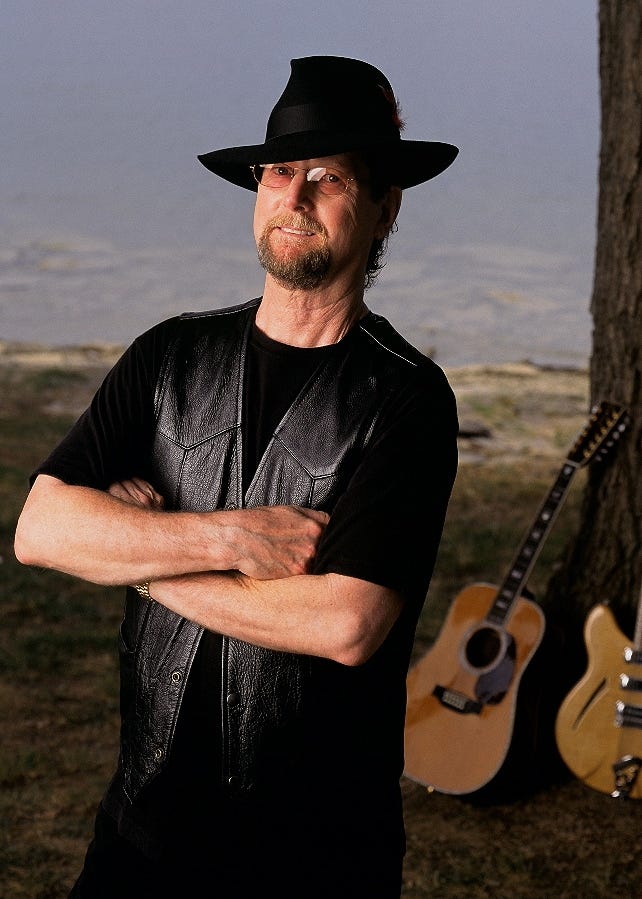
The modern industry is obsessed with the “retro aesthetic” -a curated, superficial imitation of the past built on vintage wardrobe choices and carefully staged imagery. But the legendary “bohemian mystique” of The Byrds was never a calculated marketing strategy. It was born of absolute chaos and necessity.
McGuinn vividly recalls the moment their identity was forced to pivot after their matching black velvet suits were stolen at Ciro’s. Left with nothing but their everyday clothes, they took the stage in their raw, authentic state. The industry establishment of the era had no idea how to handle this unpolished defiance.
“Image has always been an important factor in live performance,” McGuinn says. “But we weren’t trying to look bohemian, those were the only clothes we had. I remember our manager hired a man from Las Vegas to teach us dance steps. We didn’t go along with it and he finally threw up his hands and quit. He said, ‘You guys don’t have what it takes to make it in show business!’ ‘Mr. Tambourine Man’ went to number one shortly after that.”
This is the ultimate truth of the McGuinn ethos: real mystique cannot be taught by a Las Vegas choreographer or optimised by a modern algorithm. It belongs to those who refuse to dance to someone else’s steps.
-Shelley D. Schwartz