

HEIDI CURTIS - Her new single "SIREN", Bohemian myths & the Cathartic Geordie Ritual
Interview with Heidi Curtis on her newest single "Siren"

The wind does not whistle along the Tyne; it howls in a frequency only the initiated can decode. While the industry demands a flattened, digital “rush,” Heidi Curtis has chosen the “long road,” allowing her roots to settle into the foundations of a self-made myth. We have observed the transition from the high-velocity friction of “Undone” to the current atmospheric weight of “Siren,” and we recognise it for what it is: a tactical retreat into the canyon.
Through a series of decoded dispatches, Curtis reveals the blueprint behind the mysticism - a Geordie mythology built on ancient trees and analogue conviction.

THE RIVERBANK’S INVOCATION
The origin of “Siren” was not a studio session but a haunting. Emerging from a “darker place emotionally,” the track was born when the wind caught the railings of a riverbank, creating a high, lonely whistle.
“I started harmonising with it and writing a poem about a siren tempting sailors to the waters edge,” she reveals. “I envisioned the siren as a metaphor for something darker within us all.”
However, We must make sure to mistake this shimmer for grace. The Siren is an symbol of beautiful treachery. A luring mythical creature whose melody is the precursor and invitation to a inevitable destruction. The pull of temptation and destruction. It is a “vein of mysticism” that suggests Curtis isn’t just singing - she is lurring, channeling. Comparable to the shamanic “Canyon” energy of Jim Morrison or the ritualistic storytelling of Kate Bush, she operates in a space between worlds. In her lyricism, “the swan in the flooded field of the mind” is not an image of grace but an apparition of psychological warfare. To “tie yourself to the mast of this ship” is a futile gesture; when the frequency hits, the resistance dissolves.
NORTH SHIELDS AS A RITUAL LOCATION
The North East does not just act as location. It adds weight and mythological history. To understand the “Siren” is to understand the geography of the Tyne - a river that has spent centuries swallowing the industrial ghosts of shipyards and the salt-spray of the North Sea. In the silence between the foghorns and the rusted iron railings of North Shields, there exists a specific frequency of isolation that most are conditioned to ignore. But it is here, in the shadow of the cranes, that the “Siren” was summoned. In the whirling sea that drowned many, many ships centuries ago.
THE INDUSTRIAL OCCULT
There is a pervasive myth in our corners of the North that the landscape is alive, a sentiment Heidi Curtis has successfully tapped into. This is not the pastoral mysticism of the South; this is the Industrial Occult. It is built on the bones of a region that has been “left to its own devices for forever.” In North Shields, the line between the physical world and the mythic is paper-thin. When Curtis speaks of “ancient trees” and “sea-battered cliffs,” she is not utilising metaphors of convenience; she is documenting the local landscape as a site of ritual.
The Tyne is her “flooded field of the mind.” It is a boundary line. The Geordie accent - so often caricatured or stripped away by industry gatekeepers - is, in her hands, returned to its original state: a guttural, jagged, and entirely unyielding form of communication.
THE VOWEL AS A WEAPON
Curtis does not only sing; she invokes. The Geordie dialect carries a rhythmicncadence that is inherently suited to the “witchy” folk-horror aesthetic she inhabits.
“My accent definitely attributed to the way I manipulate vowels... they almost always change shape during song,” she observes.
In the architecture of her sound, the Geordie accent acts as an anchor, preventing the “atmospheric swell” from drifting into mere ethereal pretension. It grounds her in the reality of the North. While other artists seek to polish their vocals into a “palatable,” flattened sheen, Curtis leans into the grit. She understands that the “bitter end” she sings about is not a distant, abstract concept - it is the sensation of the North Sea in cold, and biting.
THE LORE OF THE COAST
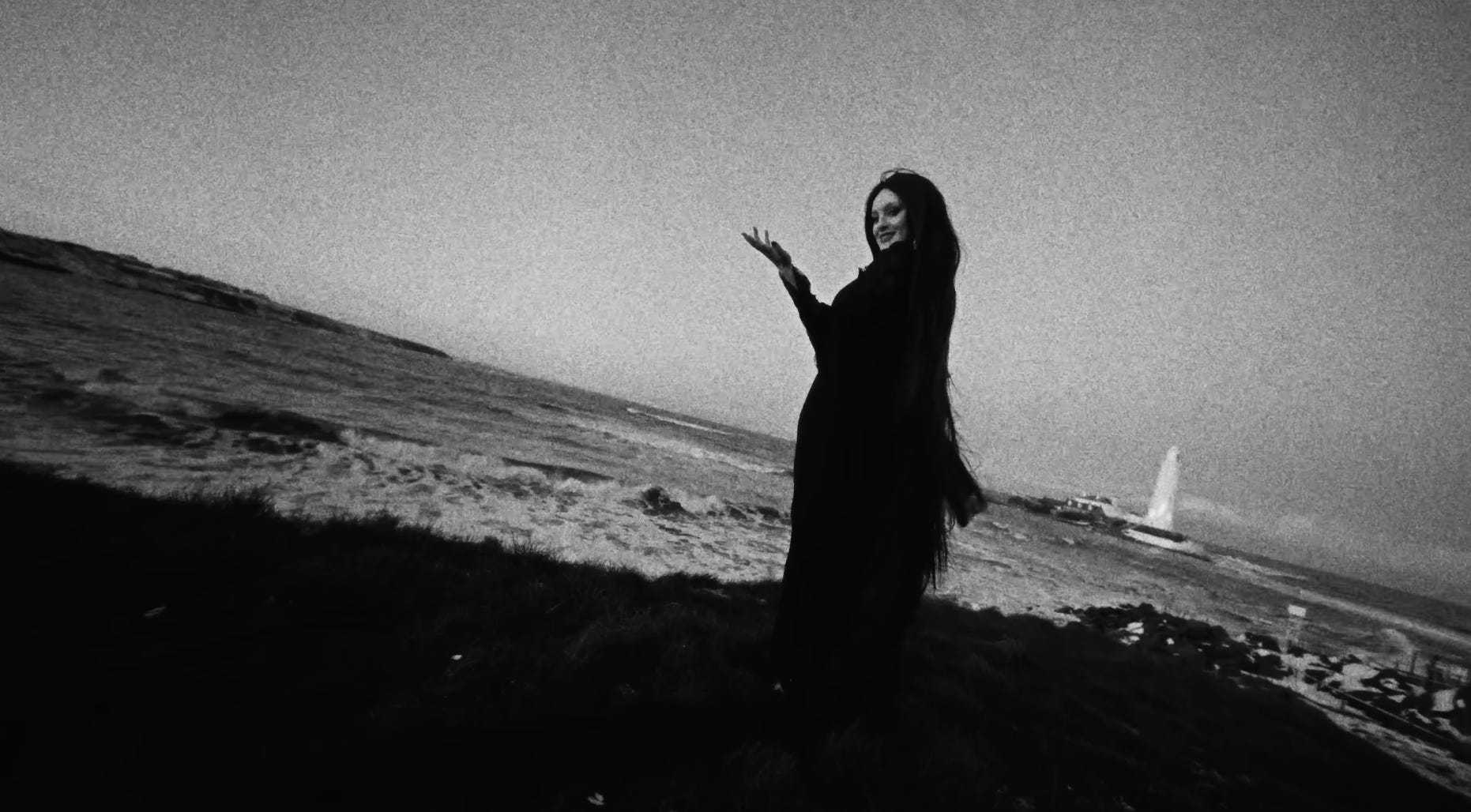
“Siren” does not as a creature of Greek myth alone but as a local apparition - a manifestation of the North Sea’s indifference. In the folklore of the Shields coast, the water is a voracious entity, a place where sailors get lost and stories are buried. By positioning herself as the Siren, Curtis is performing an act of narrative reclamation, of rediscovery and to some degree - salvation. She is no longer the girl observing from the wings; she is the entity at the water’s edge, commanding the “bitter end.”
THE GEORDIE CATHARSIS
In our world, the “redacted” is often the most powerful. Curtis views her North East identity not as a regional quirk but as a weaponised truth. In an era where heavy accents are systematically “cut out of artistic spaces,” her refusal to dampen her voice is an act of defiance.
“The way I sing comes from somewhere deeper within; it’s guttural and cathartic, almost feeling quite ritualistic mid-song,” she explains. “My accent definitely attributed to the way I manipulate vowels... they almost always change shape during song.”
This is the Geordie spirit as a “High-Art” ritual - a “sensitive and expressive” force that refuses to be palatable for the tech-centered rush of the modern machine. We hear it in the “bitter end” she promises; the vowels don’t just sit on the tongue, they wrap around the listener like a snake in a fever dream.
THE BOTANICAL OCCULT
There is a “vintage, timeless shimmer” to the Curtis aesthetic that suggests a rejection of the modern gag order that has become a massively trendy feature in popular music. Heidi is magnetised by the organic - the weight of vintage equipment and the simplicity of “holding art in her hands.”
Her connection to the earth and nature is literal. As a student of herbalism and botany, she finds her identity in the forest, “understanding the plants” and searching for “magic in the mundane.” Her songwriting is a visual process, where the sonic landscape must mirror the physical. This is the blueprint for a new kind of 70s folk-horror: “One foot in the fire, the other on the gas. You’re far from home” It is the precarious balance of a woman who knows exactly which herbs heal and which ones poison. She elaborates:
“Ancient trees, sea-battered cliffs and mountains all come to play in my lyricism. It’s in nature that I feel understood and accepted in my truest form.”
ANCIENT GEORDIE ROOTS
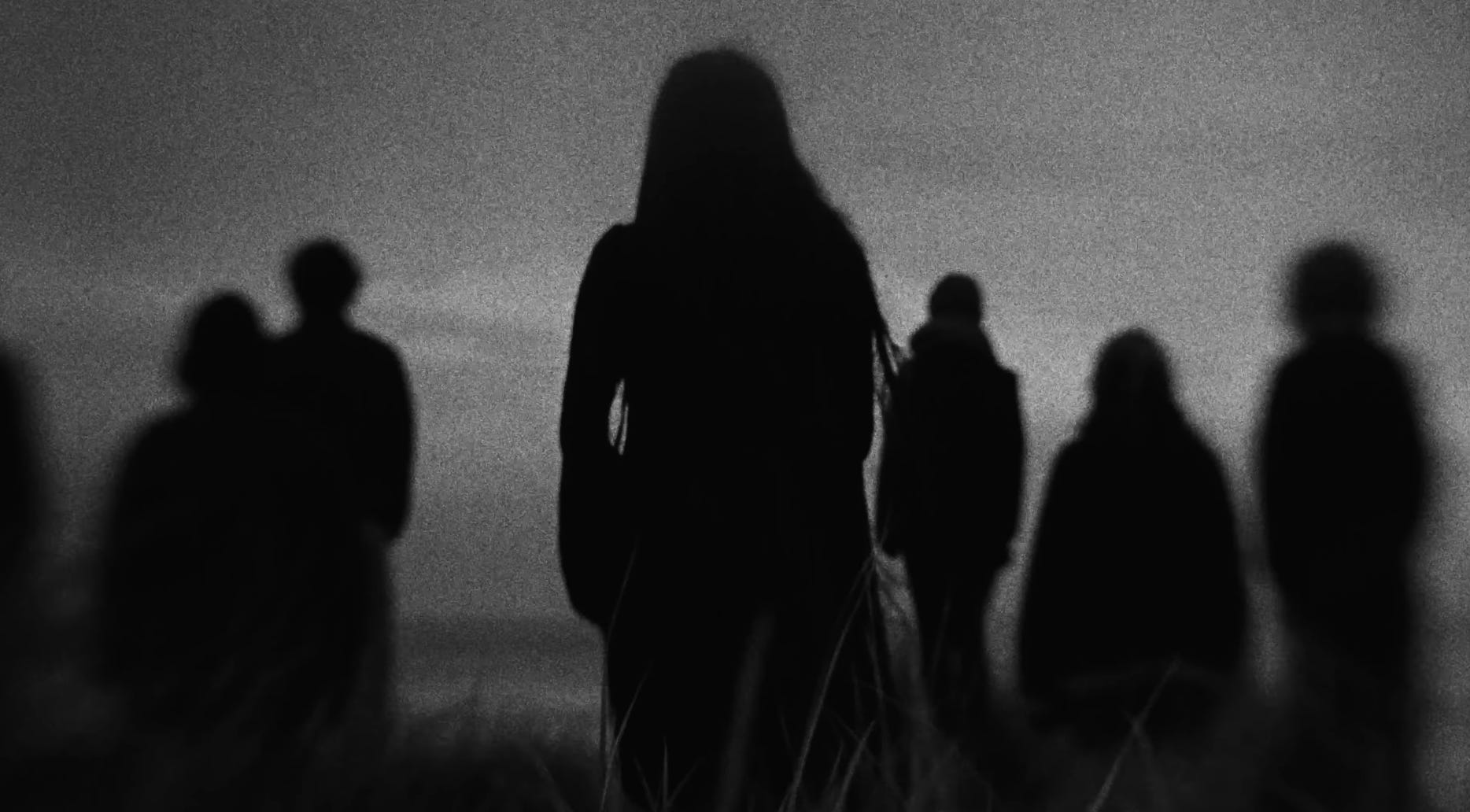
Having spent years “observing giants from the wings” of arena stages, Curtis has mastered the art of the “big old wait.” While the industry moves at a frantic, disposable pace, her work follows the “Architecture of the Swell” - a flow between the energetic friction of “Undone” to the mystical depth of “Siren.” :
“Things come and go, whereas my music feels like an ancient tree that can’t be moved, its roots firmly embedded and rooted in the foundations I’ve laid over the last few years.”
She is no longer an support act. She has grown into the narrator of a realm where listeners can find their own place within the shadows and the seas. Whether you are sipping “heavens honey” to drown out the noise or reaching into the “broken hollow of your bones,” you are now under her very own command. The world feels complete only when the hand of reality rips at the seams.
“One foot in the fire, the other on the gas.”
With the visuals Heidi creates here, the transition from “Undone” to “Siren” is complete. We see the way the dark water swallows the light. Heidi Curtis has moved beyond the “fast-paced world” and into a timeless, analogue realm where she is the sole mystical architect.
As she stands at the water’s edge in her visual world, she isn’t just looking for “magic in the mundane” - she is the magic. The “long road” has led here: to a flooded field where the Siren sings, and the world finally feels complete, even if it is “still so bleak.”
The ritual has begun.
-Shelley D. Schwartz
Follow the Siren: