

FIONA-LEE: Her new single "Every Woman"
Interview with singer-songwriter Fiona-Lee about her new single "Every Woman", regional identity and the warmth of the Yorkshire accent

(TRIGGER WARNING: SA)
This feature contains discussions of sexual assault and domestic trauma. Reader discretion is advised. This interview explores the raw reality behind "Every Woman," including themes of violation and trauma. Please skip this read if you are feeling sensitive today.
THE ERASURE OF THE LOCAL
To the untrained ear, the North of England is often flattened into a single, grey monolith with heavy rains, steaming factories and yet an infinite green beauty. But to the archivist, the distinctions are jagged, vital, and increasingly rare. We are currently living through the quiet death of the “English Subculture.” The digital age has homogenised the youth; the local scenes that once bred specific tribes - the Mods, the Punks, the Casuals - have been replaced by a globalised, algorithmic aesthetic. What used to be the “Town Square” or local pub is now a digitally accurately curated feed, and the accent is drifting toward a transatlantic standardised blur. Pulling a cover over one’s personality in order to fit in.
Except, perhaps, in East Yorkshire.
Here, the resistance is absolute. Fiona-Lee is the proof. She is not a product of the “Industry” in the stereotypical London sense. She is a product of Howden, a market town that does not perform for the camera. In a culture that rewards polished perfection and the placeless, Fiona-Lee offers something radical: a specific, immovable sense of geography.

THE MUSICAL DNA
She didn’t come from a musical dynasty, but she grew up in a house where music was the architecture. Her father’s records provided a canonical education in the “Big Music” of the ‘70s and ‘80s - the sprawling, melodic ambition of Genesis, the heartland storytelling of Bruce Springsteen, and the intricate, poetic vulnerability of Joni Mitchell.
By the time she picked up a guitar at fourteen, she had absorbed a rare duality: the ability to aim for the rafters while remaining devastatingly intimate. As she matured, she discovered the uncompromising edge of the ‘90s - finding empowerment in the raw, controlled fury of PJ Harvey. It is this heritage that underlines her sound: a high-fidelity sound blending classic rock enormity and alternative grit.
THE GEOGRAPHY OF THE VOICE
“I don’t hide behind any kind of facade,” she tells me. “Not as an artist, not as a person. I think people can see straight through it anyway.”
She sings and speaks with the flat, unpolished vowels of someone born in East Riding. It is a voice that hasn’t been sanded down for mass consumption. In a world of transatlantic vocal tics, her refusal to mask her heritage is a political act.
“I feel quite confident and accepting of the way I express myself vocally now, so it probably is a big part of my identity as an artist and maybe helps with the relatability aspect of the songs,” Fiona-Lee explains. “People often say that northerners are generally ‘warmer’, so I like the idea of my accent making people feel more welcome when listening to my music.”
There is a structural science to this “warmth.” In the linguistic North of England, the defiance of the “BATH-TRAP split” and the rhythmic pull of t-glottalisation are not just phonetic markers; they are the architecture of the region. By leaning into these foundational sounds - the same ones that define the Mancunian and Scouse identities - Fiona-Lee isn’t just representing a town; she is reinforcing a linguistic frontline. This is the Northern paradox: the “Grit” is what is safeguarding the “Warmth.”, a sense of familiarity and a rebellious act against polished voices. By staying true to who she is vocally, she is inviting the listener into a space that feels lived-in and honest.
THE ARCHITECTURE OF THE ORDINARY
Her songwriting could be described as “Kitchen Sink” - a term borrowed from the 1960s British dramatic tradition that refused gentility, therefore, placing the mess and mundanity of ordinary life under bright lights. I ask her how it feels to take those quiet, specifically Yorkshire realities and carry them to take up space on a loud rock stage. Does the volume of the music change the meaning?
“I don’t think they change meaning,” she says, considering the shift from the comfort of the recording studio to the venue. “It depends how I’m feeling whilst performing; if I’m able to fully let go and get lost in the performance, the songs can feel really close to me emotionally and it can be quite intense; like it suddenly hits me how real they are.”
She pauses. “But sometimes I forget what I’m singing about and it becomes more about the energy in the room... The meaning never changes, I think it’s just how much attention I pay to it dependent on how vulnerable I’m willing to be on the night.”
THE INTERNAL RIOT
Yet, that very vulnerability is a double-edged sword. In her track Imposter, she sings: “Fake suffering for attention / Looks like someone’s got ambition.” It is a brutal self-indictment, capturing the uniquely Northern fear of getting “too big for your boots.”
“I find it hard to explain all the lyrics in Imposter, because they relate to a lot of my internal dialogue with myself that no-one else sees,” Fiona-Lee admits. “The line ‘fake suffering for attention’ is referring to the struggle with validating my own suffering. But yes, it’s essentially what the imposter in my head says to me, trying to keep me squashed and to not get too ahead of myself.”
Now as she moves to larger stages and her first headline tour is on the horizon, that voice doesn’t necessarily get quieter. “Unfortunately, imposter syndrome can feel worse the bigger the stage,” she says. “I’m slowly getting better at silencing the doubt, though.”
THE ANATOMY OF “EVERY WOMAN”
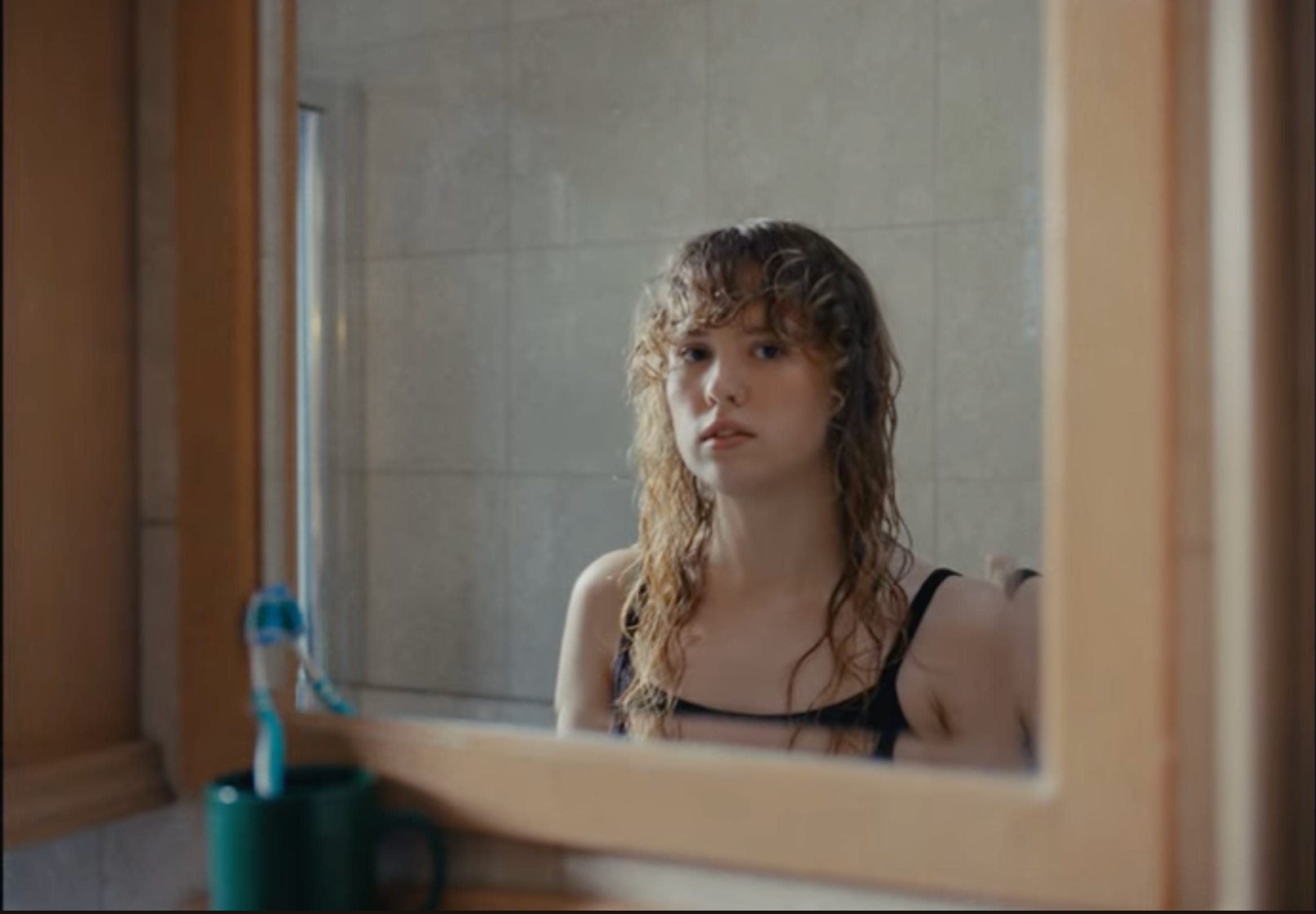
If Imposter is about validating her personal suffering, her new single “Every Woman” (released today) is about validating the collective. Though, the track is built on crystalline, soaring guitars that recall the widescreen atmosphere of Jeff Buckley, Sam Fender or The War on Drugs, they share something that all of the former don’t include - the true, unpolished perspective of being a woman. It describes the truths about sexual assault and all of the psychological burdens that follow it: the normalisation, denial, the silencing.
The song begins with the terrifying banality of the familiar:
“I always liked you in school / Like you were one of the good guys...”
Here, she identifies the precise horror of modern violation. It rarely looks like a movie villain; it looks like “one of the good guys”, the guy that you laugh with before your maths class. The narrative then pivots to the brutal logic of survival:
“Cause it could’ve been worse / You could’ve hurt my body / It’s not the first violation of my body...”
This is the most devastating line on the record. It contextualises the female trauma within a hierarchy of pain, where the narrator forces herself to minimise the experience because she has already normalised the violation. Fiona-Lee’s lyrics manage to successfully portray and describe that very mindset of denial that every victim goes through.
THE FINAL SILENCE
However, the song’s sharpest critique is aimed at the lack of accountability and the fragility of the status quo. In the bridge, Fiona-Lee delivers a necessary ultimatum:
“Boys should be educated and taught what it looks like without getting so defensive.”
A line that demands a seat at the table, refusing to coddle the very discomfort that allows these patterns to persist.
The song concludes with a shutting down of the interrogation: “And it’s all straight-forward / So don’t ask me so many questions...”
This is the exhaustion of the witness. It is a rejection of the demand for more proof. “Every Woman” is a track of reclaiming female power and releasing the shame. A powerful feminist anthem to serve as a reminder that no victim is alone in their burden, their shame, their anxitieties.
THE VERDICT
In a music industry that is rapidly becoming a hall of mirrors, Fiona-Lee is doing the work of preservation. She is keeping the reality alive - insisting that art must reflect the mess, the pain, and the unvarnished truth of the town you grew up in.
I ask her, simply, what is the one emotion she wants the fans - especially those who see themselves in the lyrics that she sings - to be left with when she leaves the stage?
“Validated.”
Fiona-Lee’s new single “Every Woman” is out now.
Her EP “Every Woman” is released on 17 April via Capitol Records
Listen here:
SUPPORT
If you have been affected by any of the themes discussed in this article above or in the lyrics of “Every Woman,” please know that support is available. You are not alone!
Rape Crisis England & Wales: Call 0808 500 2222 (24/7) or visit rapecrisis.org.uk
Samaritans: Call 116 123 (24/7)
The Survivors Trust: Call 0808 801 0818